

The Details That Changed Everything
When we think about transforming a home, our minds often go straight to the kitchen, living room or bedroom. But sometimes, it’s the spaces in between, the hallway, staircase and connecting rooms, that have the biggest impact on how a home feels.
For this residential interior design project in Newcastle, the aim wasn’t simply to redecorate. We wanted to bring character, warmth and cohesion to several spaces that had previously felt disconnected, creating an interior that felt considered without feeling overly designed.
Giving the hallway its own identity
The entrance sets the tone for everything that follows, so we wanted this hallway to have a real sense of identity.
Rather than treating it as somewhere you simply pass through, we approached the hallway as a room in its own right. Wallpaper brings pattern and depth, while the flooring, lighting and carefully selected furniture give the space a much stronger presence.
The result feels layered and welcoming, giving you an immediate sense of the rest of the home from the moment you walk through the door.
Turning the staircase into a feature
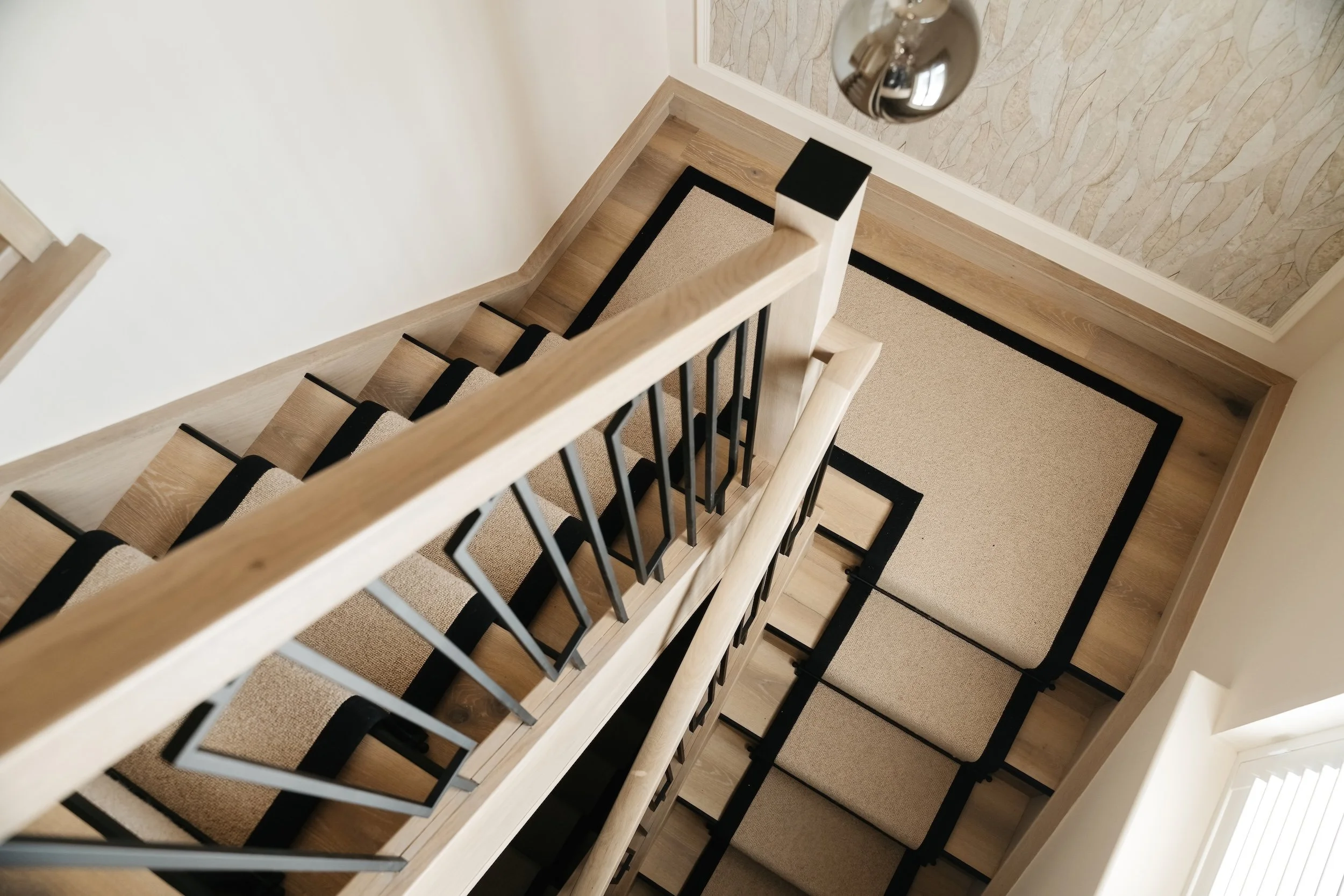
The staircase became one of the defining elements of the project.
It’s easy for a staircase to be treated purely as a practical necessity, but it occupies such a large visual area within a home that redesigning it can completely transform the space around it.
We updated the staircase and introduced a runner to add softness, texture and contrast. The new bannister and carefully considered finishes give it a much more contemporary feel while still complementing the character of the property.
Instead of disappearing into the background, the staircase is now a feature in its own right.
Creating a home office that doesn't feel like an office
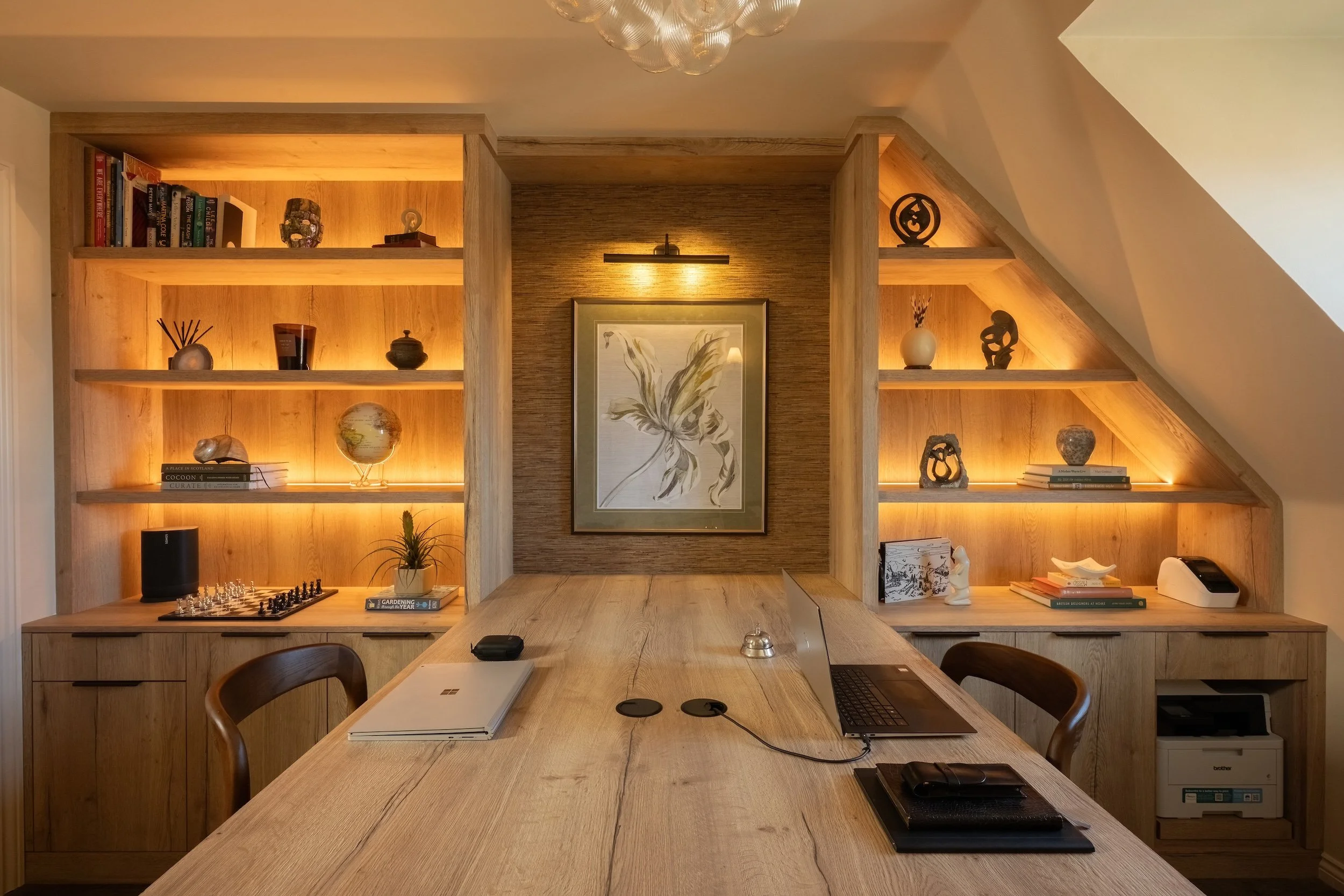
A home office needs to be functional, but that doesn't mean it should feel corporate or disconnected from the rest of the house.
Here, we wanted to create a practical workspace with plenty of storage while maintaining the warmth and character found throughout the rest of the interior.
Bespoke joinery allowed us to maximise the available space and hide away some of the less attractive realities of working from home. The finishes, lighting, furniture and accessories then soften the room and make it feel like a natural extension of the home.
It works hard when it needs to, but still feels calm and inviting when the working day is over.
Creating a cohesive interior
One of the most important parts of designing several areas within the same home is making sure they speak to one another without making everything match.
Throughout this Newcastle home, we repeated tones, materials and subtle details to create a visual thread from one space to the next.
The wallpaper, timber, flooring, textiles, metal finishes and lighting each have their own personality, but together they create an interior that feels cohesive.
For us, this is often the difference between a home that has simply been decorated and one that feels truly designed.
The details that changed everything
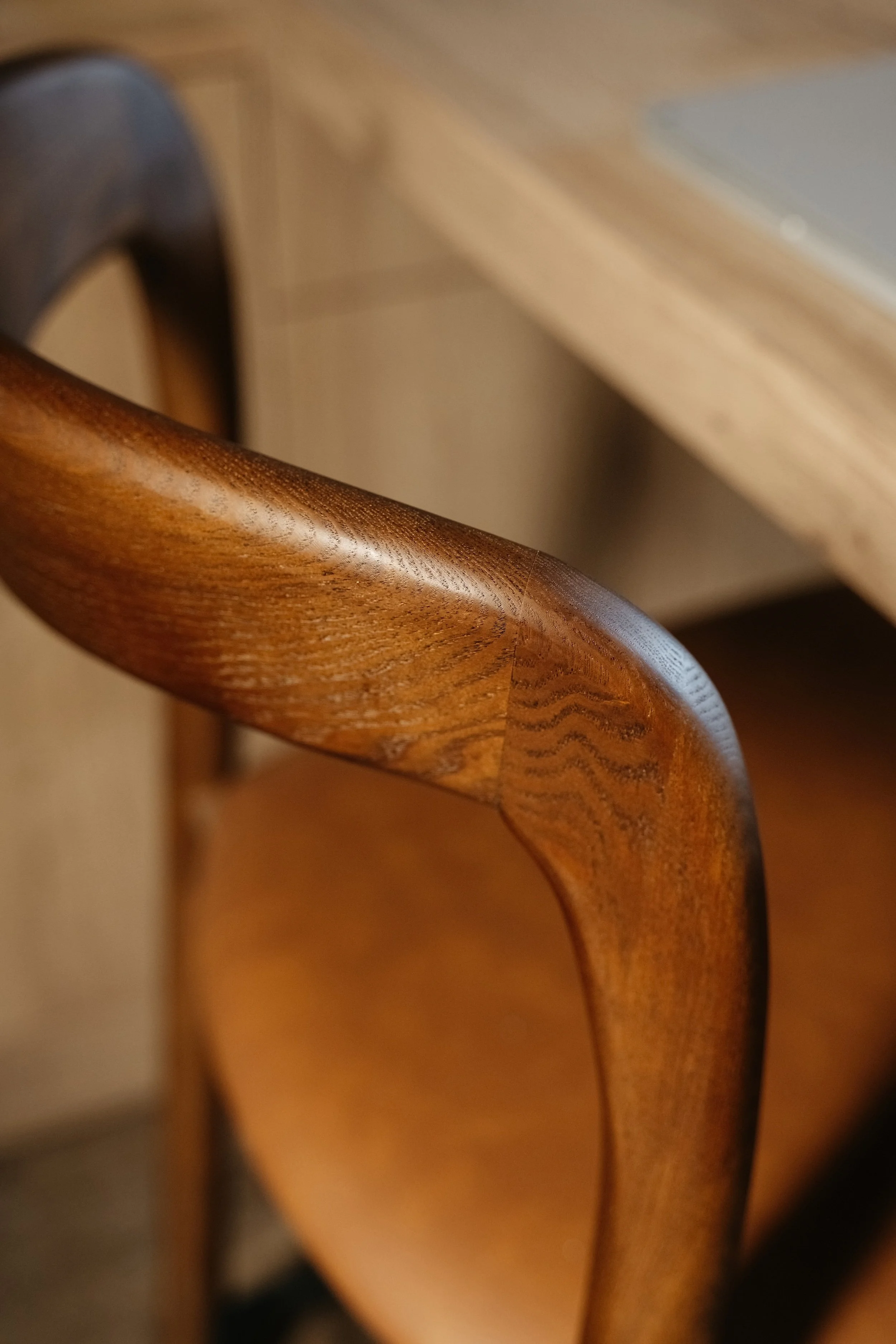
Looking at the finished photographs, some of our favourite elements aren't necessarily the biggest ones.
It's the transition between two materials. The way the runner sits against the staircase. The texture of the wallpaper. A beautifully finished piece of bespoke joinery. The position of a light fitting. The way one colour picks up another elsewhere in the space.
Individually, these decisions can seem small. Together, they completely change how a home looks and feels.
As interior designers, that's what we love about the design process. It isn't simply about filling a room with beautiful things. It's about considering how every element works together to create a home that feels effortless once it's finished.
We work on residential interior design projects across Newcastle upon Tyne and the surrounding areas, from individual rooms to larger, multi-room transformations.
If you're planning changes to your home and would like help bringing everything together, we'd love to hear about your project.